Soccer Games: Soccer Stars
- 4.5
- Rating
- 100.00M
- Installs
- Free
- Price
 Analysis by App-foxy
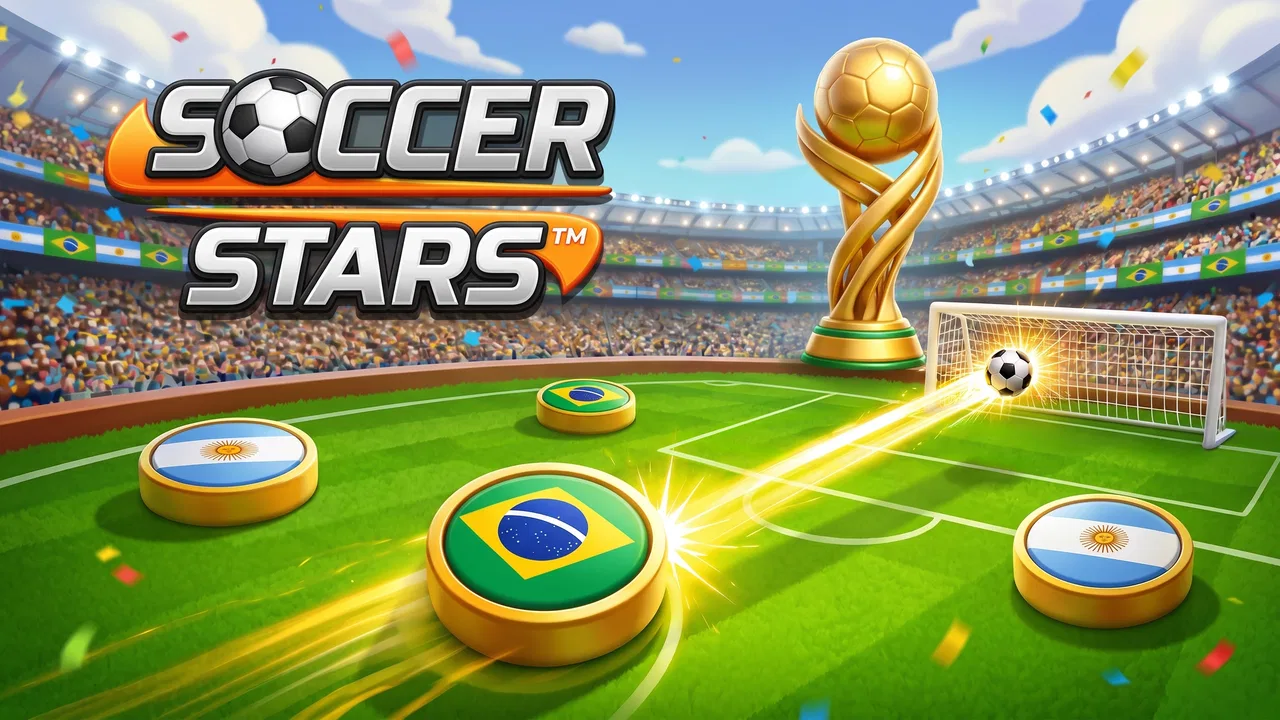
I have always liked sports games that let me play a quick match without asking me to learn a complicated control system first, and Soccer Stars fits that mood unusually well. It turns soccer into a compact, turn-based contest: instead of controlling a full team in real time, I aim and flick pieces around the pitch, trying to send the ball past the other player’s defenders and goalkeeper. That simple idea makes each move easy to understand, but the angles, rebounds, and defensive positioning give it more depth than the cheerful presentation initially suggests.
After spending time with it, I see it as a particularly good choice for short sessions. I can play while waiting for an appointment, take a few turns during a break, or challenge someone when neither of us wants a long console-style match. It is a free sports game from Miniclip.com, rated for Everyone, and it has become a very familiar name on mobile. Its average rating is 4.6 from around 2.4 million ratings, while its install total has passed 100 million, so there is clearly a large audience for this style of soccer.
How the current game feels to play
I find the game easiest to judge when I focus on the decision behind each flick, rather than whether a move looks like a shot. In this section, I’ll look at how a match’s turn-by-turn pace shapes the experience and why patience can matter as much as aim. That gives a useful starting point for thinking about the habits that make play feel more deliberate.
You May Also Like

 Google Keep - Notes and lists
Google Keep’s Quiet Growth Shows the Appeal of Simpler Notes
As mobile work gets busier, Google Keep keeps winning a simple contest: capture a thought quickly, find it later, and get on with the day.

 Blood Strike: 2.5 Anniversary
Blood Strike’s Loadouts Turn Every Drop Into a Tactical Gamble
A close look at Blood Strike’s custom loadouts: how fast access to signature weapons reshapes its battle royale rhythm, rewards preparation, and narrows the gap between fights.

 Pandora - Music & Podcasts
Pandora’s Music Is Easy to Start, but Harder to Recover
Pandora’s strength is its low-effort path from a seed to a station. Its weak spot is how much confidence it asks you to place in connection, setup, and quiet recovery.

 8 Ball Pool
 Is Built on Rivalries, Rematches, and Routine
A close look at the rivalries, rematches, shared routines, and unanswered safety questions that turn a quick pool match into a persistent mobile community.

 Samsung Music
’s Quiet Strength Is Playing What You Already Own
Its reach comes less from spectacle than from dependable access to a personal library. That simplicity is both the app’s strongest retention engine and its ceiling.

 AccuWeather: Weather Radar
AccuWeather Review: A Quick, Clear Forecast for Everyday Decisions
For everyday plans, the best forecast is the one you can understand quickly. AccuWeather makes rain timing, radar, and local conditions easy to act on, with a few trade-offs.
More From Our News Desk



A soccer match reduced to decisions that matter
The appeal is not realistic football simulation. There are no long formations to adjust, no need to memorize a large control layout, and no pressure to manage every player at once. I take a turn, choose a direction, set the strength of the flick, and watch the result. The pieces slide, collide, and stop according to the force of the shot and the shape of the pitch. Then the opponent gets a turn.
That structure gives every action a small puzzle attached to it. A direct shot may be tempting, but a defender can block it. A softer touch might move the ball into a better position for the next turn. Sometimes the most useful move is not an attempt on goal at all; it is a defensive nudge that closes an angle or leaves the opponent with an awkward reply. The best players are not simply flicking harder; they are planning where the ball and their pieces will finish.
The controls are friendly enough for a first match, yet the physics create moments that are difficult to predict perfectly. A ball can rebound from a wall, clip another piece, or stop in a position that changes the whole exchange. That unpredictability keeps matches lively, although it can also feel frustrating when a carefully planned shot produces an unexpected bounce. I enjoy that tension in short bursts, but I would not describe it as a replacement for a serious football simulator.
Why the online format works so well
The online player-versus-player focus gives the game its strongest reason to stay installed. Playing against another person makes even a basic exchange feel meaningful. I am not only solving a fixed challenge; I am trying to read someone else’s intentions. If an opponent repeatedly attacks from one side, I can start protecting that route. If they leave a piece too close to the ball, I can use a collision to disrupt their plan.
Matches are also naturally divided into turns, which makes the game more forgiving than real-time multiplayer. I do not need perfect reflexes or a high-end device to compete. The format is more about patience and positioning than speed. That makes it suitable for players who enjoy competitive games but dislike frantic touch controls.
There is a trade-off, however. A turn-based match can lose momentum if the other player takes too long to act. The stop-and-start rhythm is part of the design, but it means the experience depends on the quality and pace of the opponent. I prefer it when I want a relaxed contest; I would choose a real-time soccer game when I want constant movement and immediate reactions.
Learning the physics without wasting matches
New players should resist the urge to aim directly at the goal every time. My most useful early adjustment was to treat the first few turns as positioning opportunities. A small movement can place a piece between the ball and the goal, protect a defensive lane, or create a better angle for the next attack. Strong flicks are satisfying, but they are often less reliable than controlled touches.
It also helps to study the stopping point rather than only the direction of the shot. The important question is not just where the piece travels, but where it will remain after contact. A move that looks aggressive can leave the ball exposed for the opponent. Conversely, a modest touch can force a difficult response. This is one of the game’s less obvious strengths: the controls are simple, but the consequences reward players who think one turn ahead.
When I play on a small screen, I take an extra moment to check the projected path before releasing. Finger placement can obscure part of the action, especially when I am trying to judge a narrow angle. The game is accessible, but accuracy still benefits from slowing down. That is a practical difference between playing casually and improving consistently.
What progression adds to the experience
The competitive structure gives victories a purpose beyond the individual match. Winning feels like progress, while losing usually suggests something specific to improve: rushing shots, leaving the goal open, or failing to account for a rebound. I like that the core lesson comes from play rather than from a large tutorial system. The more matches I complete, the more naturally I recognize safe angles and dangerous positions.
At the same time, progression can make the game feel more demanding than its bright, simple appearance suggests. Players who want a completely relaxed experience may become annoyed when a losing run makes every match feel like a test. I recommend treating the result as feedback rather than as a judgment of skill. That mindset keeps the game enjoyable, especially because the physics can occasionally produce outcomes that feel outside my control.
Anyone wondering whether the game is appropriate for younger players will find the Everyone age rating reassuring. The presentation is approachable, and the basic rules are easy to explain. Still, younger players may need guidance around optional purchases and competitive frustration. The game is free to download, but in-app purchases range from $0.49 to $119.99 per item, so I would review purchase settings before handing the device to a child.
How the game has developed over time
The game has been available since June 11, 2014, which helps explain why its design feels established rather than experimental. It has had time to build a recognizable identity around flick-based soccer and online competition. The current version is 36.11.1, a sign that the product has continued to receive version updates instead of remaining frozen in its original release state.
Those facts matter to existing players because a long-running mobile game has a different rhythm from a newly launched title. The core idea is already clear and polished around quick matches, so I would not expect every update to reinvent the experience. The more useful way to judge the current version is whether it remains comfortable for regular play, whether matchmaking and competition still feel active, and whether the familiar physics continue to provide enough variety.
For someone returning after a long break, the main adjustment is likely not learning an entirely different game, but getting used to the current feel of the menus, progression, and competitive environment. I would begin with a few low-pressure matches before spending anything or making assumptions based on older memories. A returning player may remember the basic flicking immediately, yet still need time to rebuild accuracy and confidence.
Where it fits beside other mobile soccer games
Compared with traditional soccer games on Android or iOS, this one is much less demanding. A conventional football title usually asks me to control running players, passing, tackling, shooting, and sometimes team tactics in real time. Soccer Stars strips that down to turn-based positioning and physics. That makes it faster to understand and easier to play with one hand, but it also removes the feeling of managing a full match.
If I want career progression, detailed squads, realistic movement, or a strong simulation of football, I would look elsewhere. If I want a compact competitive challenge that can be played in short intervals, this is the better fit. It also has a different social quality from a solo sports game. The opponent’s choices create variety that a fixed artificial-intelligence challenge may not provide, even though the online format introduces waiting and uneven match pacing.
It is worth being clear about the audience. Fans of tabletop-style physics, quick competitive rounds, and simple controls will probably understand the appeal quickly. Players who dislike indirect control, unpredictable rebounds, or online competition may bounce off it just as quickly. The game does not become a realistic soccer simulation after a few hours; its identity remains centered on flicks, angles, and tactical collisions.
Everyday situations where it works best
My favorite use case is a short waiting period with enough time for a match but not enough time for a larger game. I can open it, make a few decisions, and stop without needing to remember a complicated story or rebuild a large team. It also works well as a casual challenge between friends who want something competitive but do not have identical gaming experience. The controls are easy to demonstrate, while the physics leave room for the more experienced player to show better judgment.
It is less suitable when I need a fully offline distraction, a calm single-player activity, or a game that can be paused at any moment without affecting another person. The online nature is central to the experience, so someone looking for a private, uninterrupted sports game should consider that before installing it. Likewise, people with limited patience for waits, losses, or purchase prompts may prefer a paid game with a more predictable structure.
Small techniques that improve matches
One useful habit is to separate attack and defense in my thinking. When the ball is near the opponent’s goal, I look for a scoring line, but when it is in the middle, I first ask which piece should control the next exchange. This prevents me from making hopeful shots that give away position. It is a subtle change, yet it makes matches feel less random because each flick has a purpose.
Another technique is to use the walls deliberately. A rebound can open an angle that a straight shot cannot, but it should be planned as a route rather than attempted as a desperate trick. I try to imagine the ball’s second contact before committing. If I cannot explain where the ball should end up, the shot is probably too risky.
I also avoid moving my goalkeeper or the nearest defensive piece without considering the reply. An aggressive block can protect one side while exposing another. The opponent only needs one clear lane, so defensive moves should be judged by the options they leave behind. This is where the game becomes more thoughtful than its quick-match format suggests.
Where the current experience still falls short
The biggest limitation is the gap between simple controls and sometimes complicated outcomes. A player can make the correct-looking decision and still lose because of a collision or rebound that is hard to anticipate. That is part of the charm for some people, but it can feel unfair when a match turns on a tiny contact. I enjoy the physics most when I accept that control is about probability and positioning, not absolute precision.
The online design can also expose differences in patience and experience. A beginner may face an opponent who understands angles immediately, making the first sessions feel discouraging. The game would be easier to recommend to everyone if the learning curve always felt gradual, but competitive matchmaking can make that curve uneven. New players should give themselves several matches before deciding whether the system suits them.
Optional purchases are another point to consider. The game is free, which lowers the barrier to trying it, but the presence of items priced up to $119.99 means families should use sensible purchase restrictions. I would not install it on a child’s device without checking those controls first. Even for adults, the safest approach is to decide in advance whether the free experience is enough and avoid treating purchases as a solution to a losing streak.
What I would watch as a returning or new player
For a new player, I would watch how quickly the physics begin to feel readable. If rebounds and piece collisions become interesting rather than irritating, the game has a good chance of becoming a regular habit. If every miss feels arbitrary, no amount of progression will fix the basic mismatch in taste. The first few sessions are a useful test because the central mechanic is fully visible from the beginning.
For an existing player, I would pay attention to whether the current version preserves the qualities that made the game enjoyable: quick access to matches, understandable controls, and enough competitive variety to make another round worthwhile. Version 36.11.1 places the game in an ongoing state rather than a one-time release, so continued play is best judged by how well the present experience fits personal habits, not by nostalgia for earlier versions.
I would also watch my own spending and play time. A short-match game can quietly turn “one more round” into a much longer session, particularly after a close loss. Setting a stopping point after a win or a fixed number of matches helps keep the competition fun. That is not a flaw unique to this title, but its compact format makes it especially easy to keep reopening.
My recommendation
After reviewing it as a mobile sports game, I think Soccer Stars is worth trying if you want online soccer built around quick decisions rather than realistic team control. Its strongest qualities are the approachable flick mechanic, the surprising amount of tactical thought in positioning, and the convenience of turn-based matches. The large player base and 4.6 average rating also show that the concept has connected with a substantial audience.
I would recommend it to casual competitors, friends looking for a quick challenge, and sports fans who enjoy physics-based games. I would skip it if my priority were a detailed football simulation, a purely offline experience, or complete control over every movement. The occasional awkward rebound, uneven learning curve, waiting between turns, and optional purchases are real considerations.
For me, the deciding point is that the game gives simple actions meaningful consequences. I can play for a few minutes, yet still finish a match thinking about a missed angle or a defensive choice I should have made differently. That is a good sign for a free mobile game. It is best approached as a compact tactical duel, not as a full soccer simulator, and within that role it remains an enjoyable, easy-to-start choice from Miniclip.com.
FAQs for Soccer Games: Soccer Stars
01What platforms is Soccer Stars available on?
Soccer Stars is available for both Android and iOS platforms. You can download it from the Google Play Store for Android devices and the App Store for iOS devices. This ensures that you can enjoy the game whether you’re using a smartphone or a tablet.
02Is Soccer Stars free to play?
Yes, Soccer Stars is free to download and play. However, it does offer in-app purchases. These purchases can enhance your gaming experience by providing extra coins or exclusive items, but they are entirely optional. You can enjoy the core gameplay without spending money.
03What are the main features of Soccer Stars?
Soccer Stars offers a unique take on soccer with its simple, physics-based gameplay. Key features include real-time multiplayer matches, various leagues, and tournaments. Players can also customize their teams with a variety of upgrades and unlock new formations to improve their strategy.
04Does Soccer Stars require an internet connection?
Yes, Soccer Stars requires an internet connection to play. The game focuses heavily on multiplayer interaction, allowing you to compete with players worldwide. Therefore, a stable internet connection is necessary to ensure smooth gameplay and access to all features.
05How does the ranking system work in Soccer Stars?
The ranking system in Soccer Stars is based on your performance in matches. Winning games earns you trophies, which help you climb the leaderboards. Your rank is a reflection of your skill and consistency in the game, with higher ranks offering more competitive challenges.
Pros
- Easy to learn controls
- Quick matchmaking times
- Smooth graphics and animations
- Engaging multiplayer mode
- Regular updates with new features
Cons
- In-app purchases can be costly
- Occasional server lag
- Limited offline features
- Ads can be intrusive
- Requires stable internet connection

Soccer Games: Soccer Stars
Gallery